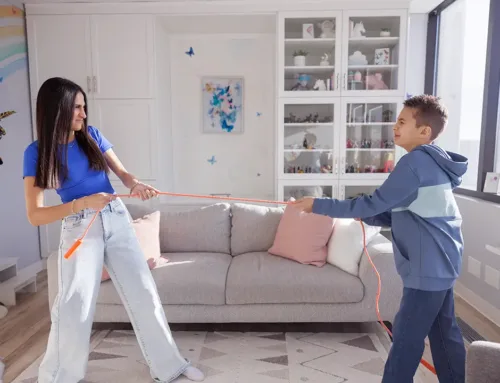
Your teen says they’re “fine”. But are they really?
“How was your day?”
“Fine.”
Sound familiar? If you’re raising a teen, you’ve probably heard this one-word response more times than you can count. If you feel like you’re hitting a wall every time you try to connect, you’re not alone. My experience as a teacher and a therapist has shown me how many parents share this struggle, especially as their kids move into adolescence and start pulling away a little.
But here’s the good news: that wall isn’t permanent. There are ways to replace it with a bridge, brick by brick, and build a strong connection that will carry your teen through these sometimes-turbulent years.
Background: why teens seem to shut down
Adolescence is a time of growth, independence, and a whole lot of awkwardness. Teens are figuring out who they are, testing boundaries, and (often) trying to seem more grown-up than they feel. It’s not uncommon for them to give shorter answers or even seem uninterested in talking to their parents. They’re trying to build connections, ideas, and build their future beyond their home base.
Growing up is exciting, but wanting independence without having all the skills of adults means awkward snags can happen along the way.
As they grow into adolescence, teens become more independent thinkers. The teen years are full of possibility. This is a key stage for teens to develop their ability to create, question, and reflect on themselves and others, as well as with the way they want to relate to the world. They’re also more sensitive to rewards and more likely to take risks, which, if guided properly, can enhance learning and drive curiosity (Davidow et al., 2016). Even though they may appear distant, adolescents still need strong, dependable relationships with their parents to help scaffold their growth (Kahn et al., 2019).
As an experienced educator, I have found that connecting with teens before you try to get your points across goes a long way. Your messages, and theirs, hit home more smoothly when there is a strong, safe, reliably supportive parent-adolescent bond. Here are 5 ideas to help you get there.
Build connection with your teen: 5 easy ways
1. Be their safe person, even (especially!) when they mess up
Teens need to know your love doesn’t depend on them being perfect. Share your own mistakes (especially the awkward ones!) to show them that messing up is part of life. For example: “When I was your age, I accidentally called my math teacher ‘Mom’ in class. Everyone laughed and I secretly cried about it for weeks. I wanted to disappear that day, but now it’s just a funny story I laugh about.”
Modelling mistakes —and talking about how you repaired them— teaches your teen that we don’t lose our lovability when we make mistakes. It also encourages them to come to you when they find themselves in trouble, rather than trying to hide it from you.
2. Help them think through and solve problems (without solving problems FOR them)
Instead of jumping in with solutions, sit with your teen and ask guiding questions:
“What are some things you’ve thought of trying?” or “What might happen if you did that?” This builds confidence and shows you trust their growing ability to make decisions, while providing some safeguards.
Teens are creative and full of fresh ideas. You might be surprised with how much you can learn from them, if you make it safe and fun for them to share them with you.
3. Explain your “why”, and listen to theirs
Offering calm, clear reasons for rules helps teens feel respected, and helps them understand how their actions impact others.
Instead of “Because I said so,” try: “I need you to put your phone away during dinner because it’s our time to connect as a family, and I want to hear about your day.” You can also listen to their point of view, “Help me understand: why do you feel that would be a good idea?”
4. Share family stories
Storytelling is a universal way families pass down values and build connection. Share funny or inspiring family stories over dinner, during car rides, or before bed. It helps teens feel rooted in something bigger than themselves and opens the door for them to share their own stories.
It also makes you feel more relatable. What was difficult for you, as a teen?
5. Celebrate what’s awesome about being a teen
Teens are often seen only for their mistakes, but adolescence is also a time of incredible courage, creativity, and curiosity. When you notice them being brave or trying something new, say so. A simple, “I really admire how you handled that situation,” goes a long way.
Parent reflection prompt
- Think about one small but significant way you can show your teen you’re their safe person this week.
- Can you share a funny mistake from your own life?
- Or praise them for something they handled well? Start small. Closeness and connection grow over time, with small, consistent steps.
Practical tips for busy parents of teens
Quick parent-teen connection tips to practice today:
- Share one awkward story about yourself this week.
- Ask open-ended questions instead of giving quick advice.
- What is something new you learned from your teen today?
- Swap one “Because I said so” for an explanation of your why.
- Tell a family story during dinner.
- Name one brave thing your teen did today.
You are your teen’s anchor, and the wind beneath their wings
Even as your teen pulls away (they need to; that is part of growing up and becoming more independent), you are still their safe base: their anchor. Understanding their side helps you also be their number one cheerleader, too.
As they grow into their adolescent years, with consistent patience, support, and encouragement, you can remain the person your teen trusts most, and a reliable source of love and non-judgemental listening, even if their answer to “How was your day?” is just “Fine.”
Behind the word “fine” is a teen who needs your love, support, and encouragement more than they let on.
They are watching everything you do, and despite what you might think, they do listen to your words, especially when they discover they can count on you for heartfelt connection, no matter what their day was like.
Looking for support to connect and communicate with your teen?
References and further reading
- Davidow, J. Y., Foerde, K., Galván, A., & Shohamy, D. (2016). An upside to reward sensitivity: the hippocampus supports enhanced reinforcement learning in adolescence. Neuron, 92(1), 93-99.
- Jayne, K. M., & Purswell, K. E. (Eds.). (2024). A Therapist’s Guide to Adolescent Development: Supporting Teens and Young Adults in Their Families and Communities. Taylor & Francis.
- Kahn, N. F., Graham, R., & National Academies of Sciences, Engineering, and Medicine. (2019). The current landscape of adolescent risk behavior. In Promoting positive adolescent health behaviors and outcomes: thriving in the 21st century. National Academies Press (US).
Meet the author

Basira loves working with kids, teens, and parents to provide them with customized practical tools they can use at home to enhance the parent-child connection, turning family stress into understanding, heartwarming family bonds.